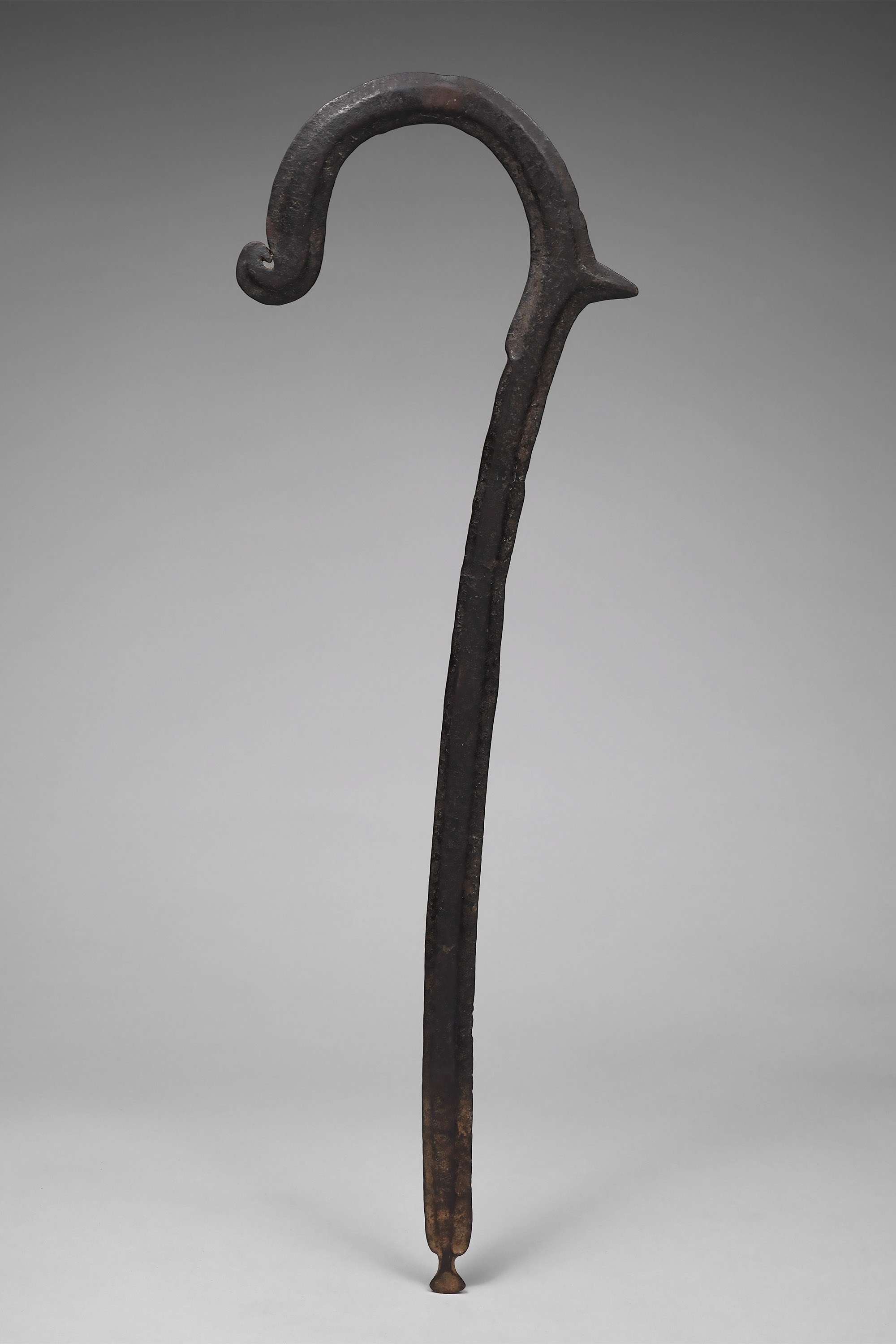
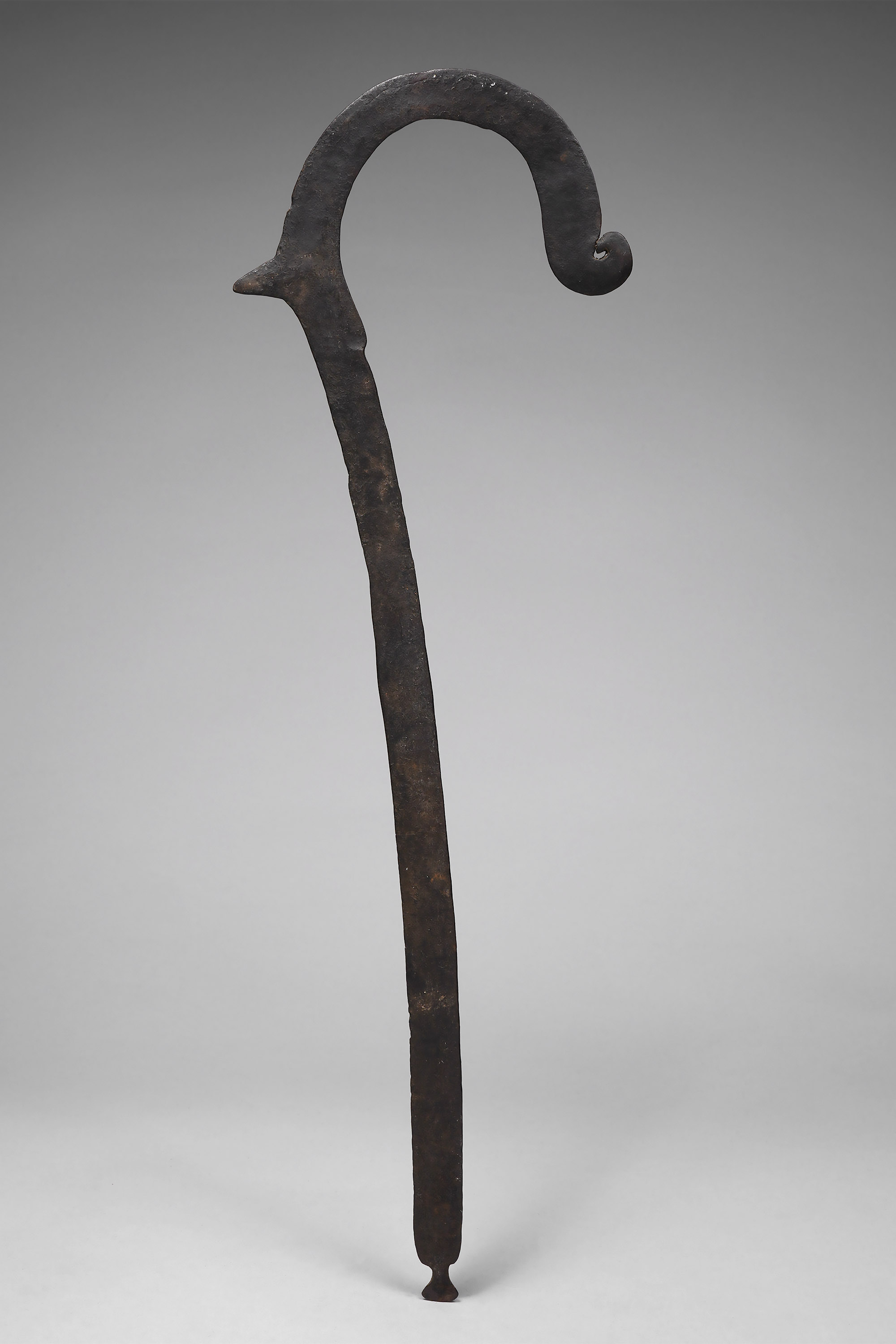
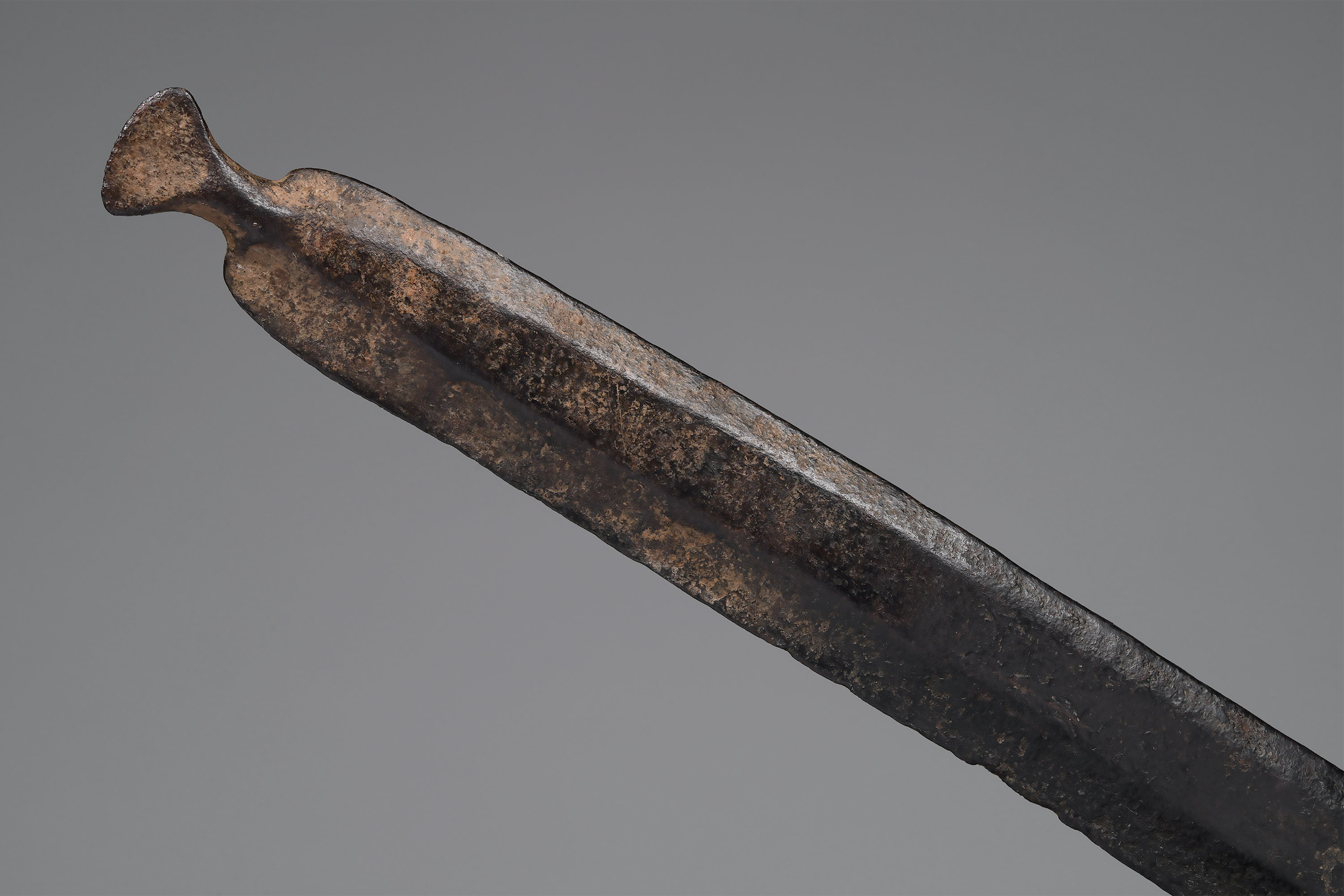
Sacred Object in the form of a Throwing Knife, Ngéégue
Laka-Ngambaye / Musseye / Marba / Massa, Chad
Iron
Late 19th / early 20th century
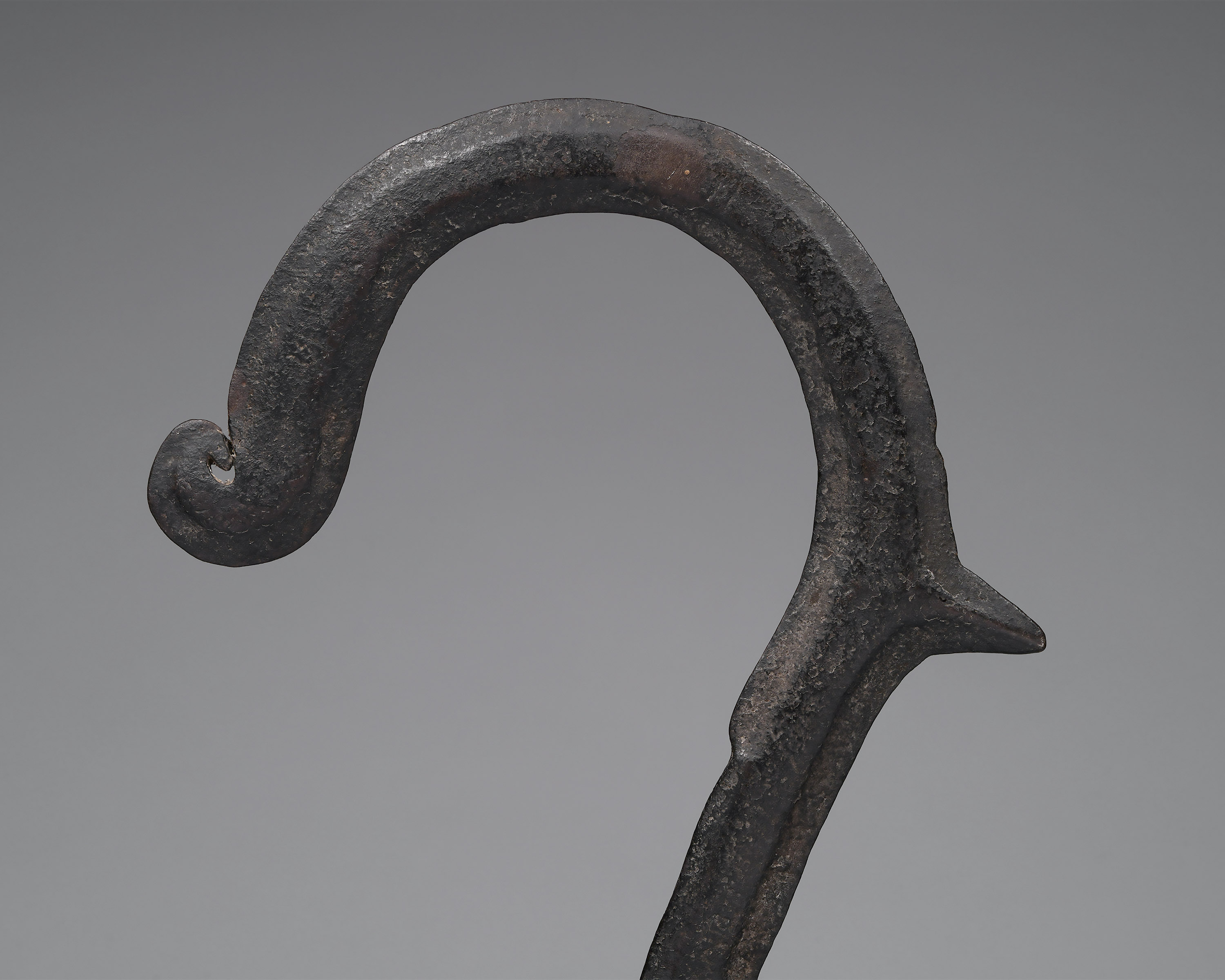
According to Norman Hurst, this distinctive blade represents ngéégue, the 'female' form of a mythical couple of throwing knives, naga-til being the male form (Ngola, 1997). The pair, known as miya-bo were highly revered and sacred relics, and even the king (Mbang, the guardian of the throwing knives) was said to be forced to resign his office if he acted without the authority of the miya-bo (Spring, African Arms and Armor, 1993). Westerdijk asserts that when this type was used by women, it functioned as a spirit medium (The African Throwing Knife, 1988).
Joseph Fortier provides the most detailed description: We always talk about the miya-bo as if it was singular but in fact, there are two: one female, called ngéégue or “Princess,” the other male, called naga-til, or “Head of Darkness.” The first, whose end is curved in a spiral like a bishop’s crozier, is the only one of importance, as it is the king’s true sacred object. The other one, shaped like an F, is just scrap. They were both placed in a little straw hut next to the King’s house. Ngéégue, the female knife (the real one) would be laid down with the butt turned to the left, towards the sunset. Naga-til, the male knife, would be laid down with the tips pointed to the right, towards the Levant, as if the woman and man were lying in a tomb. They only come out of their home once per year for the feast of sowing, and remain on view all day long under the shelter of a straw awning (Le couteau de jet sacré: Histoire des Sar du Tchad, 1982).
19.5 in :: 49.5 cm
InventoryID #13-3058
Price on Request